

The global financial landscape reached a symbolic and literal crossroads on February 5th and 6th, 2026, as London hosted the Digital Assets Forum (DAF3). Held at the state-of-the-art Convene 133 Houndsditch, the event was not merely a conference; it was a demonstration of force by the institutional sector. With over 1,500 delegates representing a combined €3 trillion in assets under management, the forum solidified London’s position as a primary hub for the regulated digital economy.
The Finestel team was in attendance, joining the 400+ buy-side leaders and 200 speakers to witness what many are calling the “Year of Production.” After years of speculative cycles and pilot programs, the 2026 summit signaled that the “plumbing” of the new financial system is finally being bolted into place.
The Institutionalization of Stablecoins
The most significant takeaway from DAF3 was the transformation of stablecoins from “crypto-native collateral” to “systemic financial infrastructure.”
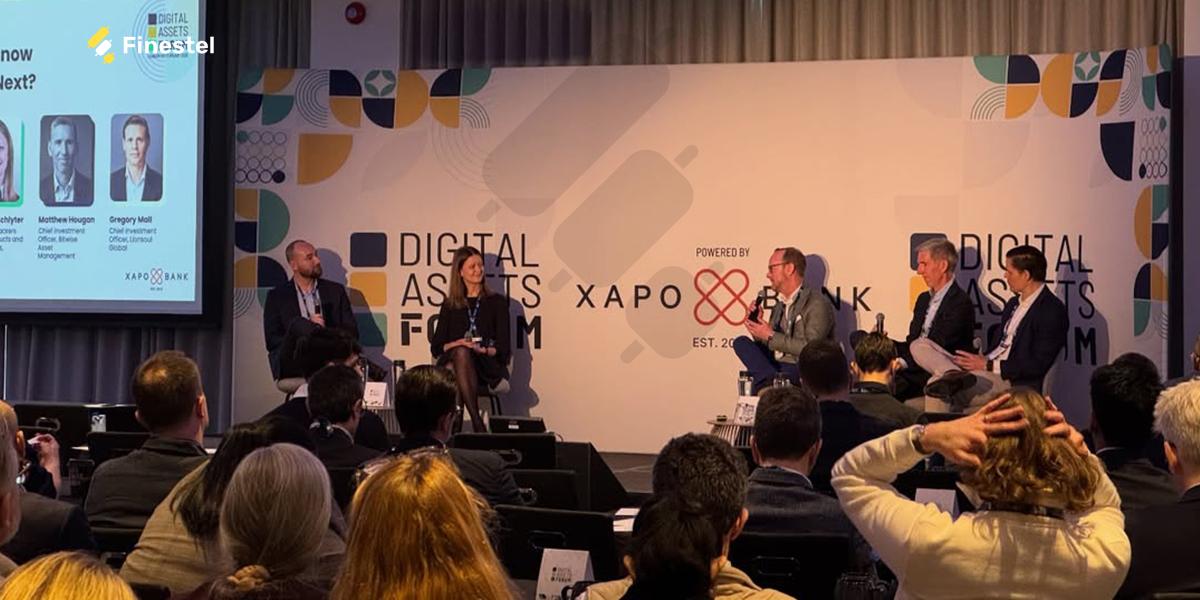
The forum opened with a landmark announcement: a European banking consortium, now expanded to 12 major institutions including BBVA, DZ Bank, and BNP Paribas, has successfully moved its regulated euro-stablecoin into full commercial production. This initiative is designed to provide the necessary liquidity rails for near-instant settlement across the Eurozone, bypassing the delays of the legacy SWIFT system.
Keynote speakers highlighted that stablecoin transaction volumes grew by a staggering 74% over the last 12 months. Discussions frequently touched upon the systemic importance of these assets; for instance, the largest stablecoin issuers now rank among the top ten holders of U.S. Treasuries globally, a fact that has forced central banks to move from skepticism to active collaboration.
Tokenization: Moving Beyond the $16 Trillion Vision
While previous years focused on the potential of tokenization, 2026 was about the mechanics of it. The consensus among the “Tokenization of Everything” panels was that the industry is on track to hit a $16 trillion market cap for on-chain assets by 2030.
-
Real-World Assets (RWA): The focus has shifted from niche assets like art to high-velocity financial instruments. We saw deep dives into the on-chain issuance of private equity, corporate debt, and carbon credits.
-
The Liquidity Challenge: Despite the technical success of tokenization, experts debated the “Liquidity Gap.” The challenge for 2026 is no longer how to tokenise an asset, but how to ensure that these on-chain markets have the depth required for institutional-sized trades.
-
Public Equities: A major highlight was the discussion surrounding the On-Chain Public Equity Network (OPEN), which is working with global regulators to allow companies to issue and trade equity natively on blockchain networks, potentially disrupting traditional stock exchanges.
Navigation of the Regulatory “Gold Standard”
The regulatory environment was a focal point, especially following the January 1st implementation of the UK’s Cryptoasset Reporting Framework (CARF).
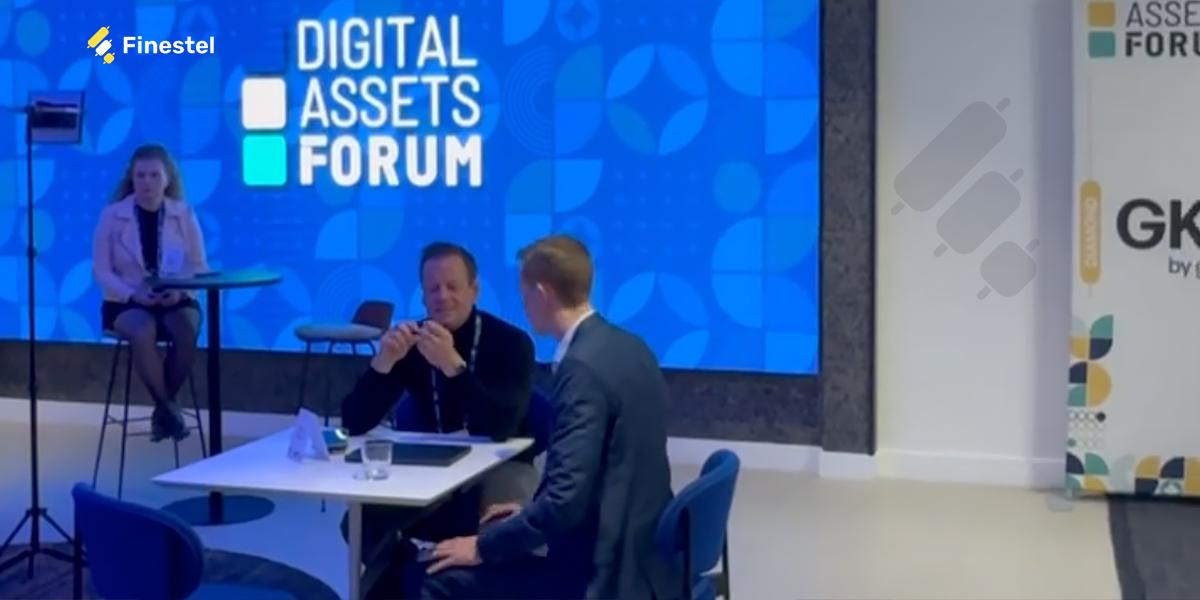
The forum served as the first major pulse-check on how these new rules, alongside Europe’s MiCA (Markets in Crypto-Assets Regulation) are affecting capital flow. Rather than stifling innovation, the “Great Regulation” of 2026 appears to be acting as a catalyst. Representatives from the European Banking Authority (EBA) and the Financial Conduct Authority (FCA) noted a significant uptick in applications for regulated digital asset licenses from traditional wealth managers and pension funds.
Furthermore, international cooperation reached a new milestone with “Project Crypto,” a joint effort between the SEC and CFTC in the US to unify digital asset oversight. Speakers suggested that this move has effectively ended the era of “regulatory arbitrage,” forcing firms to focus on compliance-first business models.
The Intersection of AI and Blockchain
A recurring theme throughout the technical stages was the synergy between Artificial Intelligence and Distributed Ledger Technology (DLT).

-
Intent-Based Trading: The forum explored how AI agents are now being used to execute complex, multi-chain trades based on simple “intents” (e.g., “Find the best yield for $1M with 95% principal protection”).
-
Security and Monitoring: AI is also being deployed as a defensive layer, providing real-time auditing of smart contracts and flagging suspicious transaction patterns before they can escalate into systemic risks. This “AI-Sentry” model is becoming a standard requirement for institutional-grade custody providers.
Conclusion: A New Standard for Finance
The Digital Assets Forum 2026 in London proved that the industry has matured far beyond its “wild west” roots. The focus has narrowed to efficiency, transparency, and institutional scale. As the delegates departed Convene 133 Houndsditch, the message was clear: the integration of digital assets into the global financial fabric is no longer a future event, it is the present reality.
For firms like Finestel, the forum provided a roadmap for the coming year: a year where technology must meet the rigorous standards of the world’s largest asset allocators.




Leave a Reply