


Complex and technical crypto solutions are becoming very popular, and Hummingbot is one of them. In this Hummingbot review, we will have a look at what the platform really offers, who it is built for, and where it fits in today’s crypto trading landscape. If you haven’t heard of it, Hummingbot is known as a powerful open-source trading bot for market making and arbitrage.
Hummingbot is widely discussed on GitHub, Reddit, and crypto forums. But it is not a simple plug-and-play tool. It is designed for advanced users who are comfortable with technical setups, APIs, and self-hosting. For many traders, this creates a steep learning curve. In this Hummingbot Review, the platform is briefly described first. Then, several Hummingbot alternatives are introduced, including options that are more accessible for traders who want practical crypto asset management without heavy technical overhead.
What Is Hummingbot?
Let’s begin our Hummingbot review by introducing what it is. Well, it is an open-source crypto trading bot framework that is built for automated trading strategies. Note that it’s not a hosted SaaS tool. Instead, it runs locally or on a server and connects directly to crypto exchanges through APIs. Users control everything from strategy logic to execution settings.
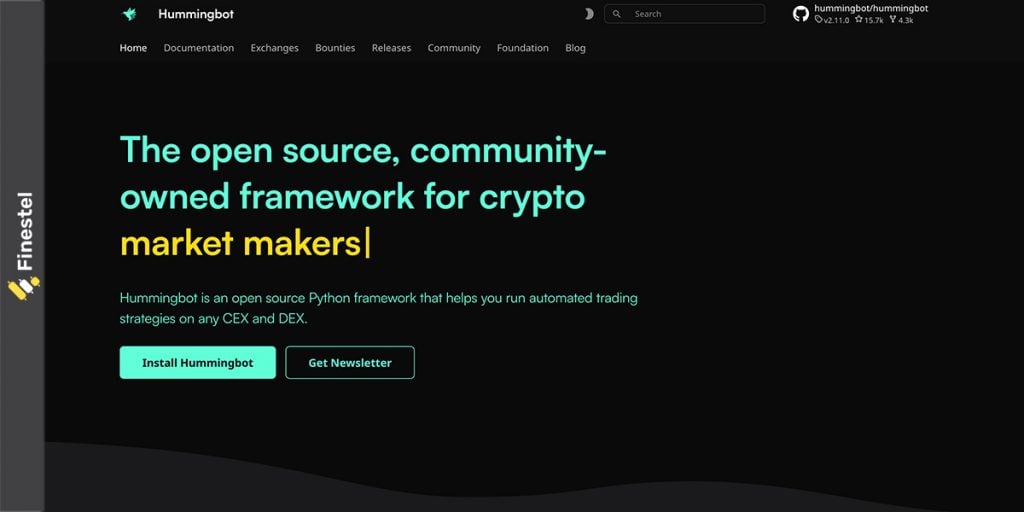
The platform is used mainly for market-making, crypto arbitrage, execution bots, and fully custom trading strategies. Traders can deploy cross-exchange arbitrage setups, liquidity provision strategies, or build their own models from scratch. Most development and updates are shared publicly on Hummingbot GitHub. There, the community contributes to the codebase and new features.
So, you must’ve picked up by now that this is not a consumer-grade product. The typical Hummingbot login happens through a command-line interface or the dashboard, not a simple web app. Setup often involves Docker, API keys, configuration files, and manual tuning. This is why discussions on Hummingbot Reddit and the Hummingbot forum itself often focus on troubleshooting, strategy optimization, and infrastructure issues rather than beginner onboarding.
Hummingbot Key Features and Capabilities
Hummingbot is not a simple “start a bot and forget it” tool. The thing I like about it is that it’s a framework with building blocks. Each feature supports advanced automation, but it also adds more decisions for the user. The sections below explain what the platform actually does.

Automated Trading Strategies
At its core, Hummingbot is built around automated trading logic. The platform supports several predefined Hummingbot strategies, with market making and cross-exchange arbitrage being the most common. Users can also create fully custom configurations by adjusting spreads, order sizes, inventory targets, and execution rules. This level of control is powerful, but it requires a solid understanding of market structure, liquidity, and risk.
Strategy Configuration and the Hummingbot Dashboard
The Hummingbot dashboard adds a visual layer to the system. It allows users to configure strategies, monitor live performance, and manage bots without relying only on the command line.
While the dashboard improves usability, it still assumes familiarity with trading concepts and technical parameters. It is a management interface, not a beginner shortcut.
Backtesting and Strategy Validation
One of the most important tools for serious traders is Hummingbot backtesting. This feature lets users simulate strategy performance using historical market data. It helps test assumptions and tune parameters before deploying real capital. Results depend heavily on correct inputs and realistic conditions, but it remains essential for strategy validation.
Open-Source Ecosystem and Community Development
Hummingbot operates inside a large and active open-source ecosystem. The project has 14,000+ GitHub stars and 3,900+ forks, making it one of the most active trading bot communities.
Most development, updates, and discussions happen publicly on GitHub, with strong community involvement. This transparency attracts advanced users, but also means progress depends on community governance and contribution quality.
Exchange Connectors and Supported Markets
A key component of Hummingbot is its exchange connectors. These are standardized API integrations that allow Hummingbot to communicate with exchanges for order management, balance tracking, and real-time market data. Because connectors follow a common interface, the same strategy logic can run across multiple exchanges.
Hummingbot supports several exchange types:
- CLOB CEX: Centralized exchanges with spot and perpetual futures trading (example: Binance)
- CLOB DEX: On-chain order book exchanges for spot and perps (example: Hyperliquid)
- Gateway DEX: AMM-based decentralized exchanges and aggregators via Gateway (example: Uniswap)
This structure allows traders to deploy strategies across centralized and decentralized venues with the same core logic.
Docker Deployments and Infrastructure
Advanced users often run Hummingbot using Hummingbot Docker setups. This improves deployment speed, stability, and environment consistency. Docker is commonly used for server-based trading, cloud hosting, and scaling multiple bots, but it adds another layer of technical complexity.
Hummingbot Miner and Liquidity Incentives
Hummingbot Miner is a liquidity mining concept tied to approved strategies. Users can earn rewards by providing liquidity through supported connectors and configurations. This model is mainly attractive to professional users and exchanges, not casual traders.
Governance, Connectors, and Bounty System
Hummingbot uses a transparent, token-based governance system. HBOT holders decide which exchanges are supported and how connectors are managed through formal proposals.
There are three main ways new connectors are added: DIY governance (self-built), bounty-managed development, or foundation-sponsored integrations. Costs range from free (self-built) to enterprise-level sponsorships.
Hummingbot Strengths and Weaknesses
By now, you should know that Hummingbot is built for serious automation work. It is not trying to be a simple retail trading bot. The strengths are clear, but there are also some weaknesses.

Strengths
The first advantage I want to mention is that Hummingbot is professional and quant-friendly. It fits users who understand market microstructure and want direct control over execution logic. The system supports advanced setups that align with market-making and arbitrage workflows.
Moreover, it’s highly customizable. Real exchange APIs are used, and even strategy parameters can be tuned to the finest details. So, you can adjust spreads, sizing rules, inventory targets, and risk controls.
Another major advantage is pricing. There are no SaaS fees because it is self-hosted. The software itself is open-source, so the main costs are infrastructure, time, and maintenance rather than subscriptions.
Weaknesses
The biggest downside I need to clarify is the technical barrier. Installation, exchange API setup, strategy configuration, and monitoring can be difficult for non-developers. So, if you make even small mistakes in the config, it can result in poor execution or unexpected results.
There is also no true plug-and-play experience like many retail bots. The interface is improving, but it still feels like a tool for builders and not casual users who want quick deployment.
Finally, self-hosting adds ongoing overhead. Maintenance, updates, Docker environments, logs, server uptime, and configuration tuning become part of daily operations. This is manageable for technical teams, but it can be frustrating for individuals, so it’s not suitable for the typical retail crypto trader.
Who Is Hummingbot For
Now, as I’ve mentioned multiple times in this Hummingbot review, it is best suited for traders and teams who are comfortable with technical workflows. By technical, I mean working with code, exchange APIs, and even running bots on cloud servers or dedicated machines.
It also fits firms, quant teams, and developers who want to build custom market-making or arbitrage systems. These are the users who need deep control over execution rules.
So, Hummingbot is not ideal for casual traders who want simple, hosted automation with minimal setup. It is also a poor fit for beginners who prefer no-code dashboards and “AI-driven” strategy selection. Community discussions on Reddit and Hummingbot forums often highlight the same theme. There’s strong flexibility, but a steep learning curve and frequent setup friction for those non-technical users.
Hummingbot Reviews Online
Hummingbot reviews on Reddit tend to be honest and practical. Many users say the solution is powerful, but not “easy money.” A common theme is mixed profitability. Some report that market making can work under the right conditions, but only after a steep learning curve and careful tuning. Others say arbitrage is harder than it looks because liquidity, fees, and slippage often wipe out the edge.
Another repeated point in Hummingbot Reddit discussions is complexity. A lot of posts are not strategy wins, but setup and maintenance issues. Users often talk about Docker installs, gateway setup problems, and troubleshooting to get a stable environment running.
Hummingbot Alternatives
Hummingbot is powerful, but it is not built for everyone. For many traders and teams, a hosted platform with a guided setup is a better fit. The tools below are common alternatives. They are grouped by audience and ease of use.
|
Platform |
Type |
Best for |
Ease of use |
Strategy depth |
|
Hummingbot |
Open-source bot framework |
Developers, quant teams, market makers |
Low |
Very high |
|
Finestel |
SaaS crypto asset management + automation |
Trading teams, asset managers, and non-technical operators |
High |
Medium–High |
|
Cloud trading platform |
Retail to advanced users who want cloud bots and copy trading |
High |
Medium |
|
|
Cloud trading platform |
Retail users who want ready tools (Grid/DCA) |
High |
Medium |
Finestel vs Hummingbot: Practical Comparison
Two different problems are solved here. Hummingbot is a build-it-yourself framework that gives you deep control. But it comes with setup work, config files, and ongoing maintenance. Finestel, on the other hand, is a hosted system. The focus is on getting automation and crypto asset management running fast, with clear dashboards and a smoother workflow.

The feature sets also point in different directions. Hummingbot shines when custom market-making, arbitrage, and full strategy control matter most, including advanced tuning and backtesting frameworks. Finestel leans into day-to-day execution and management across exchanges, with bot templates and simpler automation. It also goes beyond bots with a Finestel terminal, signals bots, and Finestel copy trading software with white-label options for teams that want branded copy trading infrastructure.
Pricing also follows the same pattern. Hummingbot is free software, but the hidden cost is time and infrastructure. Conversely, Finestel is subscription-based, but it removes most of that overhead. For anyone not operating like a technical team, Finestel is usually the more manageable and cost-efficient option.
Conclusion
To wrap up our Hummingbot review, it is a serious trading framework, not a casual trading tool. It offers deep control, transparency, and flexibility for market making and arbitrage. For developers, quant traders, and institutions, this can be a strong advantage. However, most traders will be put off by the technical effort, setup time, and ongoing maintenance, which can outweigh the benefits for them.
Now, if you want automated trading and crypto asset management without dealing with servers, configs, and infrastructure, simpler platforms make more sense. For crypto asset managers and trading teams in particular, Finestel stands out as the best alternative because it is built around hosted workflows, clear dashboards, and ready automation.




Leave a Reply